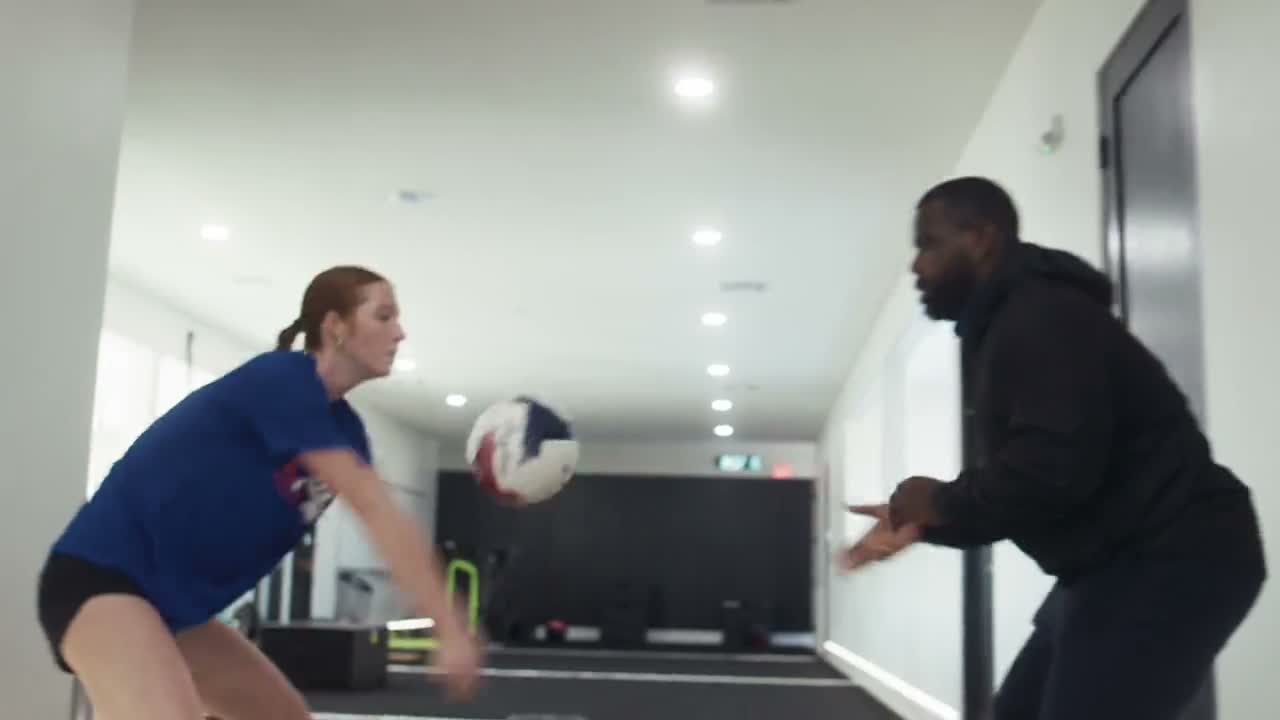
If you've been searching for a way to get faster, stronger, or more competitive in your sport, you've probably come across two terms that seem similar but are actually very different: sports performance training and personal training. Understanding the difference between sports performance training vs personal training is important because choosing the wrong one can mean wasted time, wasted money, and results that don't transfer to the field, court, or course.
At NeoFit Performance in D'Iberville, Mississippi, we specialize in sports performance training — and we get asked about this distinction all the time. Here's a clear breakdown of what sets them apart and how to decide which one is right for you or your athlete.
What Is Personal Training?
Personal training is a broad category of fitness coaching focused on general health and wellness goals. A personal trainer works with clients one-on-one (or in small groups) to improve things like body composition and weight management, general strength and cardiovascular fitness, flexibility and mobility, overall health and wellness, and aesthetic goals like muscle definition.
Personal trainers typically work in commercial gyms and design programs around the client's individual fitness level and goals. The programs usually include a mix of resistance training, cardiovascular exercise, flexibility work, and sometimes nutritional guidance.
Personal training is excellent for people who want to get healthier, lose weight, build general fitness, or simply feel better in their daily lives. It's a valuable service — but it's not designed to make you a better athlete.
What Is Sports Performance Training?
Sports performance training is a specialized discipline focused on improving the physical attributes that directly impact athletic performance. Rather than general fitness, the goal is to develop sport-specific qualities like explosive speed and acceleration, power production and rate of force development, agility and change of direction, sport-specific movement patterns, energy system conditioning for your sport, injury prevention and resilience, and recovery and readiness between competitions.
A sports performance coach designs training programs based on the demands of your specific sport, your position, your competition schedule, and your individual athletic profile. The programming is periodized — meaning it changes strategically throughout the year to ensure you're peaking at the right time.
At NeoFit Performance, our sports performance training programs are built around the principle that every exercise in the gym should have a purpose that connects directly to what you do on the field.
The Key Differences
Training Goals
Personal training asks: "What does this person need to be healthier and look better?"
Sports performance training asks: "What does this athlete need to perform better in their sport?"
These are fundamentally different questions that lead to fundamentally different programs. A personal trainer might program a bicep curl because the client wants bigger arms. A sports performance coach programs a power clean because the athlete needs to produce more force in less time to be more explosive on the field.
Exercise Selection
Personal training programs tend to use a wide variety of exercises targeting different muscle groups with the goal of balanced, general fitness.
Sports performance programs are more targeted. Every exercise is selected based on its transfer to athletic performance. You'll see more explosive movements like Olympic lift variations, plyometrics, and sprint drills. You'll see training that addresses the specific energy systems your sport demands. And you'll see a strong emphasis on movement quality — because the way you move in the gym should prepare you to move better in competition.
Programming Structure
Most personal training follows a fairly consistent week-to-week structure. You might do a similar routine for months, gradually increasing weight or reps.
Sports performance training uses periodization — a systematic approach to training that varies intensity, volume, and exercise selection across different phases. This might include an off-season strength phase, a pre-season power and speed phase, an in-season maintenance phase, and a post-season recovery and rebuilding phase.
This structure ensures that athletes peak when it matters most and avoid the overtraining and staleness that comes from doing the same thing year-round.
Assessment and Testing
Personal trainers may track basic metrics like body weight, body fat percentage, and strength benchmarks.
Sports performance coaches use sport-specific assessments to measure athletic qualities. At NeoFit Performance, we test things like sprint speed over various distances, vertical jump and broad jump power, agility and change-of-direction speed, movement screening to identify injury risk, and sport-specific conditioning levels.
These assessments give us objective data to build your program around and clear benchmarks to track your progress. They also give athletes and parents tangible proof that the training is working.
Coaching Expertise
Personal trainers typically hold certifications in general fitness (ACE, NASM, ACSM, etc.) and are trained to work with the general population.
Sports performance coaches often hold advanced certifications like the CSCS (Certified Strength and Conditioning Specialist) from the NSCA, and many have backgrounds in exercise science, kinesiology, or athletic training. They understand biomechanics, sport-specific physiology, and the unique demands of working with competitive athletes.
At NeoFit Performance, our coaching staff understands the specific demands of the sports Mississippi athletes compete in and designs programs accordingly.
Recovery Integration
Most personal training facilities don't include recovery as part of the training experience. You might stretch at the end of a session, but structured recovery isn't typically part of the program.
At NeoFit Performance, recovery is baked into the training plan. We offer Normatec compression therapy, cold plunge sessions, and active recovery programming because we know that how you recover is just as important as how you train. Our partnership with NeoLife Physical Therapy also means that if an athlete needs clinical-level care, we can coordinate seamlessly.
Which One Is Right for You?
Choose personal training if: You're focused on general fitness goals like weight loss, building muscle for aesthetics, improving overall health, or just want to be more active and feel better.
Choose sports performance training if: You're a competitive athlete (or parent of one) who wants to get faster, more powerful, more agile, and better prepared for your sport. You want training that's specifically designed to improve your athletic performance, reduce your injury risk, and help you compete at the next level.
The overlap: Some people fall in between. Maybe you played sports in college and still want to train like an athlete, or you're an adult recreational athlete who competes in a local league or plays golf regularly. Sports performance training principles can absolutely benefit these individuals — and at NeoFit Performance, we work with athletes and competitive individuals of all ages.
Why NeoFit Performance?
We built NeoFit Performance to fill a gap on the Mississippi Gulf Coast. There are plenty of great personal training options in the area — but there are very few facilities specifically designed for sports performance training with the coaching, equipment, programming, and recovery tools that serious athletes need.
When you train at NeoFit, you're not just working out. You're following a scientifically designed program built to make you better at your sport. Period.
Ready to train like an athlete? Book your free intro session at NeoFit Performance and experience the difference sports performance training makes.
---
NeoFit Performance is located in D'Iberville, Mississippi, serving athletes and fitness enthusiasts across the Gulf Coast including Biloxi, Gulfport, Ocean Springs, and Pascagoula.